
Day to Day
On any given week, our team might be sitting with a woman in her seventies in Ullapool helping her understand what her consultant's letter means and whether she should ask for a second opinion; facilitating a peer group in Inverness for people newly diagnosed with type 2 diabetes; driving to a village hall in Rogart for a drop-in that will see eight people in three hours; or taking a call from a carer in Thurso who is trying to make sense of a social care reassessment.
The work is specific, relational, and unglamorous in the best possible way. We do not run campaigns or publish position papers — we sit with people in the difficult, confusing moments that health systems produce and we help them find their footing.
We also invest seriously in the quality of that work. All of our advocates — staff and volunteer alike — complete an accredited health advocacy training programme and receive regular clinical supervision. We collect outcomes data rigorously, asking everyone who uses our services to tell us whether they felt more informed, more confident, and more in control of their health decisions as a result.
In 2025, 94% of the people who responded to our annual survey said they felt more confident navigating their care after working with us — a figure we are proud of and which we keep working to improve.
Our Services
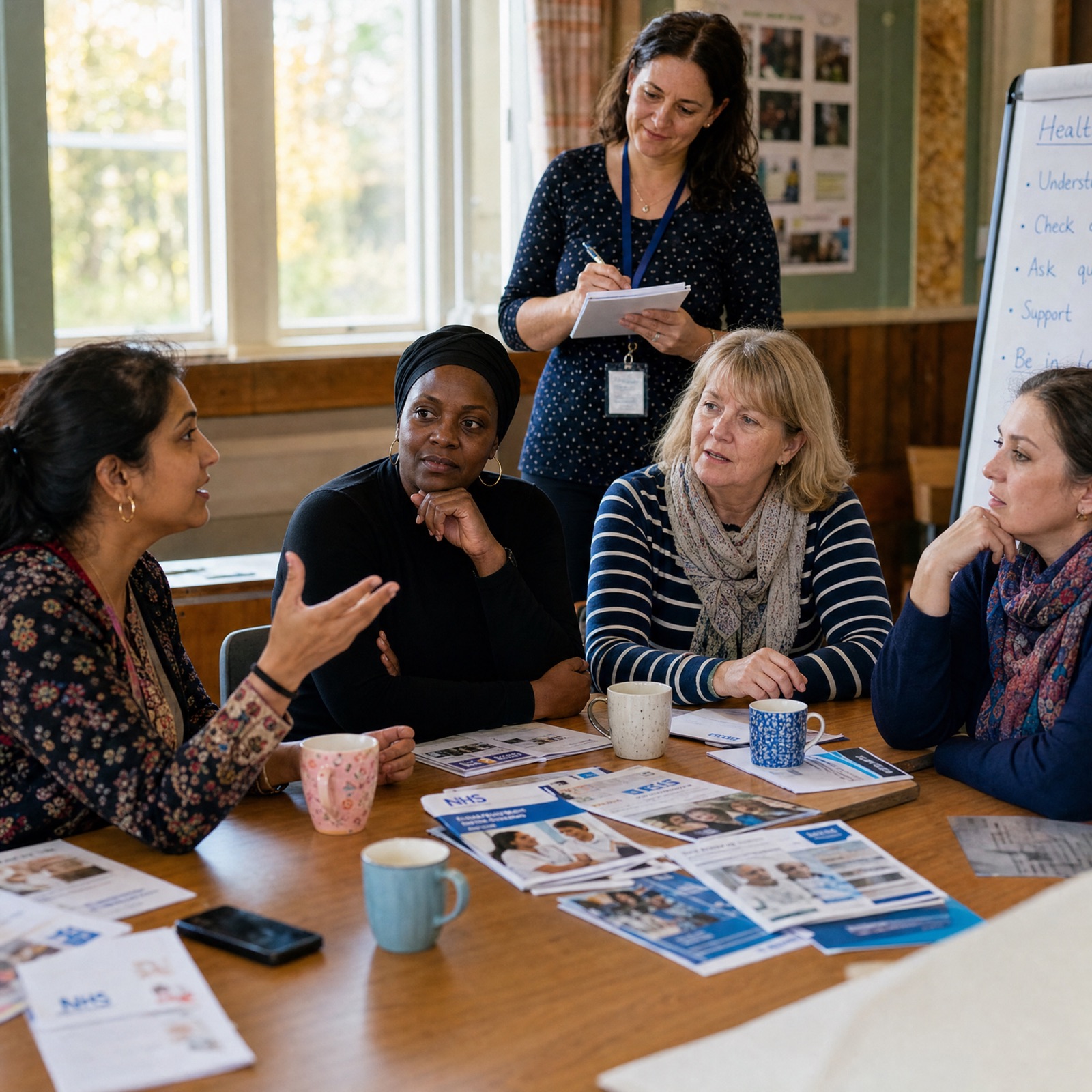
Each of our programmes addresses a different dimension of the challenge Highland residents face when navigating health and care. Together they form an integrated offer — and many of the people we support make use of more than one.
One-to-one support from a trained advocate at NHS appointments, discharge meetings, and care planning conversations.
Our advocates are not medical professionals — and that is the point. They attend alongside the patient as an independent, informed supporter: taking notes, asking for clarification, and ensuring the person's own priorities shape the conversation. We cover appointments at Raigmore Hospital, Belford Hospital in Fort William, community hospitals across the region, and increasingly provide pre-appointment preparation and post-appointment follow-up by phone or video for people who cannot travel. Referrals come from GPs, ward staff, social workers, and self-referral.
Weekly and fortnightly groups in Inverness, Dingwall, Nairn, and Fort William for people living with long-term health conditions.
Groups are facilitated by trained peer facilitators — people with lived experience of chronic illness or caring — supported by a member of our staff team. Sessions combine structured conversation around health self-management with the less tangible but equally important benefit of simply being in a room with people who understand. We run condition-specific groups for people managing heart conditions, diabetes, and mental health challenges, alongside open groups that welcome anyone carrying a long-term health concern. Attendance is free, no referral is needed, and groups run in community centres, church halls, and libraries — spaces that belong to the community.
Monthly in-person visits to remote and rural communities across Sutherland, Caithness, Wester Ross, and the Great Glen.
Our outreach worker covers a rolling schedule of village halls, community cafés, and GP waiting rooms across an area larger than some European countries. Visits are informal: people can drop in for a conversation, pick up information, ask for a referral, or simply make contact with the organisation for the first time. We deliberately do not require appointments — in our experience, the most important conversations happen precisely because someone wandered in without planning to. The programme also supports local third-sector organisations in rural areas to embed basic health advocacy skills in their own staff and volunteers.
A staffed phone and video support service for people who cannot access in-person support, running five days a week.
Developed during the pandemic and made permanent because the need never went away, our telephone support line is staffed by trained advocates Monday to Friday, nine to five. People call for a wide range of reasons: to talk through a diagnosis they don't understand, to get help writing a letter of complaint, to ask about their rights before a care assessment, or simply because they feel overwhelmed and aren't sure where to start. We also offer video consultations for people who are confident online and prefer the human element of a face-to-face conversation without the travel. All calls are confidential and no issue is considered too small.
Making a Referral
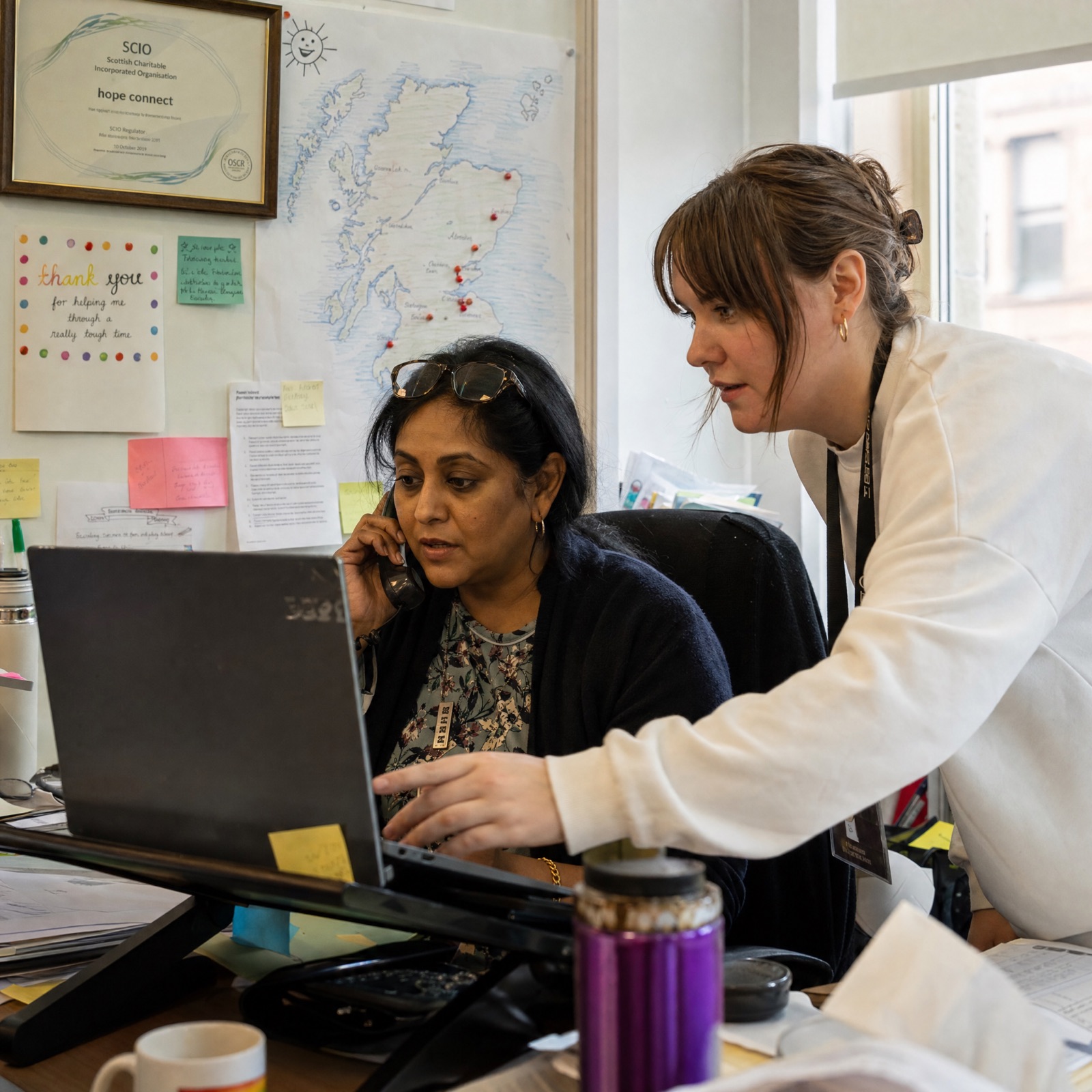
Referrals to our services can come from GPs, community nurses, social workers, hospital discharge teams — or directly from the person themselves. We aim to make contact within five working days of any referral.
There is no eligibility threshold, no diagnosis requirement, and no age limit. We serve people across the whole Highlands region, from Caithness in the north to Lochaber in the south. If you are unsure whether we can help, the best thing to do is simply get in touch and have a conversation — we would far rather speak with someone and discover we are not the right fit than have someone go without support they need.
For urgent situations — for example, someone facing a hospital discharge without appropriate care in place — please call our office directly and explain the timescale. We will do our best to respond the same day.
Contact us about a referralGet in touch to discuss how we can support you, a family member, or someone in your care.
Get in touch